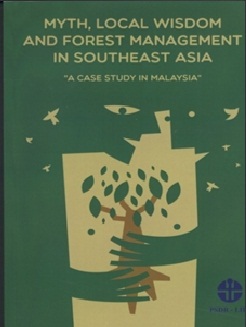
Myth, Local Wisdom and Forest Management In Southeast Asia: A Case Study In Malaysia
Malaysia is a country in Southeast Asia thatlhas fairly extensive tropical forests as part of a belt of tropical forests in the area. However, Malaysia experienced severe deforestation over the past decades, especially during the last half century when the most severe forest damage occurred in the three decades, from 1961-1991, and was still continuing until now. Thus, it is not, surprising that the forests in Malaysia decreased dramatically from 60% in 1960 to just 30% in 2006. These conditions encouraged the government of Malaysia to issue a number of policies to prevent more severe damage to forests. The research was conducted in Malaysia, where there are wel| managed forests by ethnic minorities, such as the Kadazandusun and Murut, who have lived in harmony with the forests’ for hundreds of years. The combination of indigenous knowledge with social capital and Community Forest Management (CFM) programs is a community-based eort to manage forests sustainably. This study used qualitative methods with emphasis on in depth interviews with stakeholders and eld observations in Malaysia, to learn more of the life of ethnic minorities in managing and conserving forests.
Specifications
- Language: English
- Year: 2015
- Author: Dundin Zaenuddin, Amorisa Wiratri, Anang Hidayat, Syafina Mahya Nadila