Yekti Maunati: I Always Learn New Things!

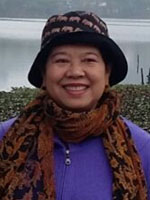
Between her several academic activities and additional task as professor research, Prof. Dr. Yekti Maunati provides a little time to have an enjoyable conversation with the P2SDR website team. She, an anthropologist and senior researcher of Research Center for Regional Resources, the Indonesian Institute of Sciences (P2SDR-LIPI), talks about the development of Southeast Asian Studies (SEA) in Indonesia. She also shares her insightful experiences for more than 30-years working in the research as well as her meaningful achievement during her career. Let’s have a look at our interview.
F: Since when have you working as a researcher in LIPI?
Y: Since 1983. So, it is more than 30 years.
F: When did you start doing SEA studies?
Y: Well, in the beginning, I did my research mostly in Indonesia. When you talked about the SEA, it means that outside Indonesia, right? So, actually, I started doing the SEA study in 2001 when I was elected as the Director of P2SDR-LIPI.
F: Do you still remember the first project that you have been done at that time?
Y: Of course, it was about tourism. In the beginning, mostly, our theme was on cultural tourism and historical tourism in SEA. The first project was in Malaysia. Then, it continued in Thailand, Philippines, Vietnam, Cambodia, and Laos. We did research also in Singapore in 2007. So, we did it in several countries in SEA.
F: Why do you interested in SEA Studies?
Y: Because actually at the beginning, I was helping Prof. Taufik Abdullah. At that time, we had a program for SEA studies. We hold a big seminar on the promotion of SEA studies in Indonesia. I was the co-editor of that seminar’s proceeding with Prof. Taufik. So, actually, I was doing it (SEA studies) before, even before I was elected as a Director. I was helping Prof. Taufik when I just finished my Master's. Actually, we held several seminars about SEA, but the big one was about the promotion of SEA studies. I already have a little knowledge of SEA studies because I edited the proceeding. That was the beginning when I started doing these SEA studies. Why do we conduct research in several countries? It because we would like to know about the historical and the condition of SEA in general, not only in one country. We decided to learn about tourism because when the study about tourism, we have to learn about cultural background, ethnicity, and several issues.
F: What do you think about the current situation of SEA studies?
Y: So, at that time, when we held a seminar about the promotion of SEA studies, I have already known that, in fact, the SEA studies were a little bit declining in United States (US) and Western countries. However, not in SEA itself, the promotion of SEA studies in several universities and research institute was happening even until now. SEA studies actually have emerged not only in SEA but also in Japan and Korea. As we can see the National University of Singapore (NUS) has The Institute of Southeast Asian Studies (ISEAS). That one is quite good for the promotion of SEA studies because they have published several good quality books. Chulalongkorn University in Thailand also has good SEA studies.
F: What is the main reason for SEA studies decreasing in western countries?
Y: I think there are so many reasons, but basically, there is always the political reason behind that. Furthermore, like in the US and western countries, they go back to discipline and global studies. So that they want to learn in globally not just a certain region like area studies. However, in SEA because so many people have learned about SEA for instance like Prof Taufik and many scholars, they have started to develop SEA in their own countries. There are so many people like Prof Taufik, Carnvit Kasetsiri from Tammashat University, Shaharir Thalib from the University of Malaya, Maria Serena from the University of Philippines. They were established Southeast Asian Studies Regional Exchange Program (SEASREP). That is the reason why it is developing. We realized that it is very important for us to know what’s happening in our neighboring countries, so we are not just want to know about our own country. SEASREP was held research collaboration, seminars, exchange students which were very important to understand neighboring countries. Another factor is that Japan and Korea also still give us the funding or investment for research purposes. They still consider SEA as an important market. So that is very important to know in particular SEA’s culture.
F: How about the development of the topics?
Y: I think it is actually entirely developing. In the beginning, we would like to know about the crisis in SEA. So, we studied about the economic crisis. At that time, we consider the financial crisis was a crucial topic. It also depends on the issue, based on the problem, for example, economic crisis, during 1997-1998 it was happening everywhere, even in Thailand which also got affected by the crisis. And tourism at that time was absolutely important because the Indonesian government has been started developing International tourism for additional country income. We would like to give advice and recommendation to the government even at that time, the Ministry of Tourism invited me to discuss tourism. After the regional autonomy, each region in Indonesia wants to develop its local tourism. Also because it’s an excellent time to improve the economy of local people and not only beneficial for the investor. So, it is imperative to learn about tourism, and it is always linked to Indonesia. We are not doing something based on our interest, but we also consider what is actually crucial for Indonesia. And now, because of the development of a lot of things primarily because of many transnational movements of people. We see the global refugees, much political turmoil, war, and a lot of things, so the movement of people is everywhere. Even the people from the Middle East and Africa want to go to European countries and to the United States. People from Afghanistan wish to go to Australia, but they have to pass the SEA like Thailand, Myanmar, and several countries in SEA. Of course, this will continue to happen, and it is crucial to know about that kind of issue. So, that transnational movement is significant. Another important topic is about minority people in SEA, for instance, the people from Myanmar and China want to move to Thailand and other mainland places in SEA. I think it is necessary to know what is happening so that we can learn how to manage a multicultural society. Later on, MEA (ASEAN Economic Communities) would be very important. The movement of people, brain drain, brain circulation, competitiveness.
F: How about the diaspora topic?
Y: When we are talking about the people movement, we are also talking about Diaspora. And diaspora is significant because nowadays, mostly we discuss Indonesian diaspora, but we cannot use them as potential diasporas like Korean or China. They get benefits from Diaspora through brain circulation, the Chinese people who work in Western countries give the contribution to the origin country. In the future, it will be important also a relation with China, so many people talk about investment and they also bring their laborers because they have a big population. Environmental issues are also important. We did not realize that actually climate change is really happening and that is very important to know the actual condition of the people who are living in the coastal area. I think a maritime study is also important to be focused on SEA studies. For example, silk road, or we also have ALKI (Alur Laut Kepulauan Indonesia). In conclusion, if we learn about other countries so we will know our chance in the future.
F: What is the main obstacle for SEA studies?
Y: For us is because the state, our country, has not yet really given priority to the research. Our funding for our research is minimal. To really have a good understanding, good study, actually we need to spend more time, mainly because I am an anthropologist, it is complicated to find a novelty. Of course, we can read a lot of book or articles, but if everybody read that’s mean that the people have already known. So, we need to read a lot more than other people. However, the funding problem does not only exist in SEA, in everywhere is quite difficult. Asian Public Intellectuals (API) for instance, for 15 years they have provided Indonesian people to study Malaysia, Thailand, Philipines, and also Japan. But, the funding has also fluctuated. SEASREP also used to provide funding for collaborative research. Mostly we had relied on funding from Japan like Toyota Foundation. But actually, Indonesia should start to provide funding for research needs. So, we have to think about future knowledge and learn about SEA studies because we are so related. Now, the world is so small because everything is so connected. That is the reason why we need to provide more funding, not just asking. I think in terms of collaboration, we have to start to also provide funding for them. I think Indonesia should do that, not just expect from other sources. So, that is like TWINSEA for instance, Indonesia is not only getting the funding but also share the funding.
F: In your opinion, why do the government not give priority to the research?
Y: I think sometimes the government wants something fastly. And it is very difficult for our research because we need like 5 years for instance to get a solid result. Then, we can get a very good recommendation. Is it not just like instant right? But I think the government needs a fast result, which does not really match the production of our knowledge that takes a longer time. So, that is the reason why we provide policy briefs or policy papers to give advice in a fast way.
F: Do you think that a number of human resources in SEA studies will be a problem in the near future?
Y: Of course no. Even though there are many students in Indonesia who wants to continue their study to Western countries, but there are some people who also still focusing on SEA studies. But even in the Western countries, they still have some experts about SEA. Even in the US, Germany, or Australia they still have people who learn about Indonesia and other countries in SEA. I know some experts, researchers, professors in Germany, and Australia who are talking about Indonesia or Vietnam.
F: Regarding the opportunity, what is the chance of SEA studies, especially in P2SDR-LIPI?
Y: I think it depends, in our discussion that we will put Asia and Pacific together, so it will become more extensive. Because sometimes it is challenging to talk about the SEA only. SEA is really also linked with China, Korea, and Japan, even when we are talking about Indonesia, especially with the people in mainland SEA. China plays a role and gives funding. They build ‘a bridge’ that connects China and SEA countries. Nowadays, when we talk about SEA, we need to touch other country areas. Talking about networking is very important because we are not living in a small world. That’s become the basis of the establishment of this center, actually. In the future, I am still quite optimistic. I see our research center is still relevant in the future because with our knowledge in different countries and the different region, we can do something, we can contribute a lot. Of course, we have to work hard. So, our research will not only provide surface results. We can get more in-depth knowledge and deeper comprehension in regards to the topic.
F: You were mentioning about novelty, how to get innovation in the short field research?
Y: That is why we must read and reviews all similar issues. Then, we will know the gap to get the novelty. Because if we understand a lot of things, for instance, diaspora or minority issues. So, we will know which one is not yet being touch by other researchers. But of course, you need experience and reading a lot. Of course, you have to learn a lot, that is a possible way to improve.
F: Do you think that Indonesian researchers can compete with other researchers from SEA?
Y: I think so. Like in our center because there are so many researchers who studied overseas. They have good capital. But of course, you just cannot rely on government funding. We need to be active to get collaboration and to be able to compete with other researchers from different countries. You have to be independent. Actually, we have to be grateful because compare to Malaysia, Thailand, or the Philippines, we are lucky to still get funding from the government although very limited budget. But of course, we cannot compare with Singapore since they have already settled in terms of funding, human resources, and facilities.
F: What kind of basic competencies that the researcher needed?
Y: Of course, you have to study and you have to get a Ph.D. because it is very important. Ph.D. is very hard and you can start to establish how to build your own argument, or we called it critical thinking that can learn a lot in Ph.D. I think during your Ph.D. you will have to be independent, you have to go in your own way, how to get your own argument, and you also have to read a lot. So, as a researcher, it is like a gate to be able to conduct good research. I think Ph.D. is sort of compulsory for a researcher. Ph.D. is like testing that to what extent you can be independent, hardworking, strong, confident, and active. Why I said Ph.D. is important simply because you cannot say yes to everything, you have to build your own argument. Besides, you need to be actively joining seminars or conferences and write a journal.
F: How to be a more productive researcher?
Y: To be honest, sometimes it is up and down. But you have to be disciplined. Sometimes, there are so many temptations and distractions. The discipline is also can be learned from Ph.D. Based on my experience, my supervisor was asked me to write around 4 pages per day after my fieldwork. It was very hard but I had to do it. So that my suggestion is after fieldwork you have to write it directly, otherwise, you will forget it. Even though you are tired, you have to write it. And you also have to read something new in your field, you have to read a lot, otherwise, you will be missed. I know that sometimes it is very difficult to manage time but you have to allocate time at least to read or write something.
F: My last 2 questions, what is the most impressive field research that you have been done?
Y: Of course field research during my study. For my master's, I did fieldwork around 6 months in the factory. I have interviewed factory workers, and I also worked at the factory because it was part of the participative observation. The topic was women at works. There were so many challenges. Sometimes, I had to write it down everything in the toilet because it was an adamant time. I talked with mostly migrants from Greece, India, Eastern Europe who migrated and work in Australia. It was awe-inspiring because I could work in a big factory since it was so difficult to get a job there. My field research for Ph.D. was also impressive because it was very intensive. I stayed with Dayak people in East Kalimantan for 1 year. In the beginning, it was so tricky, slow, but sure I could blend with the community. I learned so many new things. Nevertheless, I actually enjoy all my field works and always learn new things.
F: What is the biggest achievement during your career as a researcher?
Y: Of course, my dissertation. It because my dissertation is being published and being used by some universities like Udayana University, Gadjah Mada University, Atmajaya University, and other universities in Kalimantan. After that, I never ever able to write as good as my dissertation because we are doing research only for a short time. I consider my dissertation is the best achievement and my most significant contribution. Many people use it and appreciate it.
Reporter: Fikri
Editor: Amorisa