Halal Certification in Taiwan

MOFA Taiwan hosted Taiwan Muslim Youth Exchange Camp for Southeast Asian Countries on July 22 to 28, 2018. This camp is one of the programs under Taiwan’s New Southbound Policy (NSP) with the aim to enhance the relationship between Taiwanese youth and Muslim youth from ASEAN members, and also to promote Muslim-friendly Tourism in Taiwan. The camp consisted of lecture series and excursion visit to some tourist attractions in Taiwan. The lecture series covered various topics from Taiwan’s diplomacy to halal certification in Taiwan. Through this article, I would like to share some information I’ve gained from the camp, with focus on the halal certification in Taiwan.
Taiwan’s New Southbound Policy and Halal Market
The market of halal product is fast growing, interconnected industry of global proportion.[i] In 2017, the population of Muslim globally has reached over 1.8 billion people, or 24% of the world’s population,[ii] making a sizable consumer base. Meanwhile, according to the estimation from the Global Islamic Economic Report (GIER), Muslim-related economic output is expected to reach US$3.5 trillion by 2020.[iii] It has become an important market which is worth exploring and deserves attention from countries all over the world.
Mr. Joseph Yen-Ching Chao of the MOFA Taiwan, during his lecture on Steadfast Diplomacy and Taiwan’s New Southbound Policy, explained that due to this trend, President Tsai Ing-wen started to notice the potential of halal market and incorporated it into Taiwan’s New Southbound Policy (NSP) in 2016. He pointed out that the key component of NSP strategy is to deepen agricultural, business, cultural, educational, tourism and trade ties with the 10 ASEAN members, six South Asian countries, Australia and New Zealand. The promotion of halal exporting products has become one of the priorities under the NSP.
In April 2017, the government entrusted Taiwan External Trade Development Council (TAITRA) to set up Taiwan Halal Centre whose function is to promote Taiwan halal industry, both locally and globally. The Taiwan Halal Centre is currently helping local restaurants, including those that sell signature Taiwanese dishes such as beef noodles and fried chicken fillets, to apply for the halal certification. The number of companies with halal certification reached 714 in 2017 and is expected to increase of more than 200 this year.[iv]
Despite its big potential, halal industries features a number of unresolved questions pertaining to certifications of halal products and standardization of industry practices. There is no universal system for halal certification today. Consumer in some markets demanded a more stringent protocol of halal certification, while others favored a system that is more moderate.
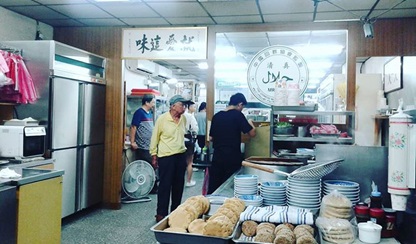
(Halal Beef Noodle Restaurant in Taipei)
Halal Certification in Taiwan
In Taiwan, there are some organizations with an authority to issue halal certificate, namely the Chinese Muslim Association (CMA), Taiwan Halal Integrity Development Association (THIDA), and also by some mosques that have cooperation with CMA and THIDA (like Taipei and Kaohsiung Grand Mosque).The CMA and the Mosques are responsible to provide halal certification for local services. Meanwhile, THIDA is responsible to provide halal certification for exporting products, such as processed food, fresh products, etc.
Mr. Majid Tsai, halal specialist of the CMA, explained that there are five categories of authentication/certification issued by the CMA for local services, this includes: Muslim Restaurant (MR), Muslim Friendly Restaurant (MFR), Muslim Friendly Tourism (MFT), Halal Kitchen (HK), and Muslim Friendly Tour Guide (MFG). As the requirements to get a Muslim-friendly certification, the hotel and restaurant must have two separated kitchens, in which one of them is a special kitchen to prepare halal food. It also has to provide special dishes and cutleries that being handled separately from those being used for ordinary (non-Muslim) guests. According to Mr. Tsai, the separation of cooking ware, dishes, cutlery and kitchen are the requirements to get the halal certificate from the CMA. In addition to that, the CMA also regularly checks the materials and ingredients being used for the foods and beverages. Besides, CMA also suggested hotel and restaurant to hire a Muslim chef to prepare the Halal foods.
There are also other requirements for hotel and restaurant to get recognition as the Muslim-friendly hotel or restaurant. This includes, at least, providing prayer timetable and Qibla direction, and also removing alcohol and pictures or accessories inside the room that are inappropriate for Muslim guests.
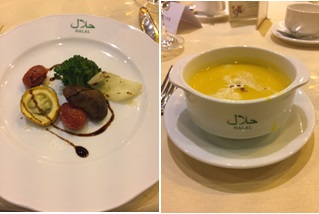
(Grand Taipei Hotel served halal foods on special plate)
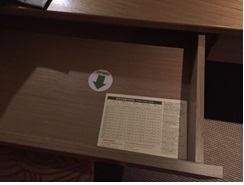
(Prayer timetable & Qibla direction inside of the hotel desk on special room for Muslim guest)
Do We Need a Special Law concerning Halal Certification?
During the lecture series, one of the participants raised an issue on the needs of halal certification law into the discussion. He mentioned about the urgency to have a legal mechanism that can push the industry to put the halal or non-halal logo on their product. This might not be included as one of the priorities of the Taiwan government policy for Muslim yet. However in some countries, the Law on halal certification is already available, for example in Indonesia.
Indonesia has played an important role in the development of halal Industries in many countries. Besides the big number of Muslim population that become a target market of foreign products, the Indonesian Council of Ulama (Majelis Ulama Indonesia, MUI) has actively assisted and has become a partner of halal certification bodies in other countries, including CMA and THIDA in Taiwan.
In the past, halal certification was actually not mandatory in Indonesia. It was running on a voluntary basis. However, after the enactment of Law No. 33 of 2014 concerning Halal Product Assurance, the halal certification became mandatory. The reason behind the enactment of this law is because the parliament considered that the state is obligated to provide protection and assurance concerning the halalness of the product consumed and used by the people.[i] According to article 4 of this law, products that entered, circulated, and traded in the territory of Indonesia must be halal certified. Moreover, article 26 regulates that business operations that produce products from material that originate from Haram material are excluded from submitting halal certificate application, but they must be attached with non-halal information on the product. Article 67 (1) stated that the law will be fully implemented 5 years after the enactment, or in 2019. So according to this Law, per October 17, 2019, all of the products that entered, circulated and traded in Indonesia must have halal or non-halal labels.
This new law created serious debate, not only in Indonesia but also in other countries. For more than a decade, Indonesia has become the target market for many products from other countries. This law brought implication to companies and business from other countries. To be able to sell their product to Indonesia, they have to follow this new rule, meaning that they must have halal certificate from the new agency called Halal Product Assurance Organizing Agency (Badan Penyelenggara Jaminan Produk Halal, BPJH). While in the past, some of these companies already got Halal certificate from MUI. This law has raised concern regarding the legal certainty issues. It is not clear whether the halal certificate issued by MUI will still be considered legitimate after the establishment of BPJH.
One thing that missing in the debate is about the government control over the product in the market. In 2016, there was a case where the Korean Police found the fake halal logo on the poultry product in the market near the mosque.[ii] The logo on the products is basically made to ease Muslim customers that the products are halal and then purchase it, especially because it is hard to find products with logo in Korea. According to Korean Sanitation Law, it is not allowed to use any mark on food, including halal logo.
Halal products are usually 1.5 to 2 times expensive than the general product. Some companies have been trying to derive unfair benefit from the price difference between halal and non-halal foods. The Korean government currently makes efforts to promote halal certificate food industry targeting Muslim market. However, the lack of government control over the product in the market has invited some industries to sell the non-halal product with fake halal logo.
This case has opened my eyes. I just realize that we need to aware about the authenticity of halal logo on every product, especially if the product comes from non-Muslim countries. When I visited Liouhe night market in Kaohsiung, I was so happy to find some local snacks with halal logo. I actually ended up buying some packages of it at that time. I never make sure whether the halal logo of the products was genuine or fake. As a person who lives in the country with Muslim-majority population, I never really concern about the halalness of the food before. I just thought that every food that being traded in Indonesia are halal, even without the halal logo attached to the product.
This case showed us that besides Muslim organization and halal certification bodies, the responsibility to make sure the authenticity of halal product must also be given to the government and the police. This could be done by incorporated it into law or regulation on halal certification.
As a country that concern in supporting the development of local halal industry and creating a more-friendly environment for Muslim, Taiwan should take the lesson from Indonesia and Korea, as the consideration in creating new law on halal certification. Muslim communities also need to raise their awareness regarding the authenticity of halal logo attached on the products (Rifki Indra Maulana/Reseracher at P2SDR LIPI)
[i] Law No. 33 of 2014 concerning Halal Product Assurance
[ii] Fake Halal Product in Korea, https://www.yeshalal.co.kr/fake-halal-english [accessed on August 29, 2017]
[i] Globalisation of the Halal Industry, https://globalriskinsights.com/2013/07/globalisation-of-the-halal-industry/ [accessed on August 29, 2018]
[ii] Pew Research Center (2017), The Changing Global Religious Landscape, from http://www.pewresearch.org/fact-tank/2017/04/05/christians-remain-worlds-largest-religious-group-but-they-are-declining-in-europe/ [accessed on August 20, 2018]
[iii] Taiwan Panorama, Halal: The Key to Muslim Markets, from https://www.halalexpo.com.tw/en_US/news/info.html?id=E13E84C416E10B87 [accessed on August 20, 2018]
[iv] Joy Chang, Aiming for Muslim market, Taiwan encourages Halal Certification:
More and more Taiwan companies are applying for Halal Certification, Taiwan News online, June 7, 2017, from https://www.taiwannews.com.tw/en/news/3181866 [accessed on August 25, 2018]